In my previous blog post, I wrote about Scott and Helen Nearing, an American couple who chose to live a simpler life in the 1930s. They shared their experiences in a book, leaving the world with some valuable tips on how to live more simply with less stress and more abundance. Because I too have been trying to live this way for several years now—and thereby experiencing the emotional and spiritual abundance that comes with it!—I would like to dive deeper into each of these suggestions and what they mean to me in the coming blog posts.
I find all of their suggestions equally valuable, but the one that appeals to me most right now is: ‘Be at peace with yourself.’ Before I share my own experiences on this, I would first like to make an important note: finding inner peace is not a quick fix. There is no guide, no book, and certainly no blog post that can tell you how to live in peace with yourself in 1-2-3. For me, finding inner peace took me years, and it's something I still work on every day (and will continue to work on for the rest of my life). In this blog post, I'll discuss the tools that work for me, which does not mean they will work for everyone. Recovery is a personal process. We are all unique beings, uniquely created, and there is no one size fits all. It's a matter of trying things out again and again and feeling whether they bring life or take life away from us. It's the life-giving activities we want to keep. The rest we can throw away. Alright, now we've got that out of the way, we can get started!
'Be at peace with yourself’ is a concept that could be interpreted in dozens of ways. This is how I understand it: knowing who I am and loving myself, by taking good care of myself; and experiencing inner peace and tranquility deep within me. It’s about not being blown away by the world, by staying connected to my inner core. About knowing who I am, regardless of what others think of me. Steadfast, connected, and authentic are some key words that come to mind.
I'm going to divide this into two parts, in two blog posts. This one will be about self-care and self-love, and the next one will be about experiencing inner peace.
Today, I live in peace with myself, I love myself, and I am comfortable in my own company. But that hasn't always been the case, because until five years ago, I wasn't really able to be alone. When I was alone, I felt very much uncomfortable, and I didn't really know what to do with myself. It was still doable if it was only for a few hours, knowing that my boyfriend at the time would be home later that day, but being alone for an entire day? It scared the hell out of me. So I made sure my schedule was full: going to work every day, often going out for drinks with friends in the evening, and having a fun party or going on a trip on the weekend. When I was at home and wanted to rest, I would lie on the couch and watch Netflix for hours, or scroll through social media on my phone, comparing my life to that of others. It didn't make me any happier, even though I thought it did. Because in the quiet moments, I felt empty, so I sought out more and more stimulation. I needed those dopamine shots. But always needing more leads to a never-ending search and is really like a bottomless pit. I somehow knew that I couldn't go on like this, but it was only when life brought me to my knees that I started to take action. So it was time to thoroughly rethink my whole life.
So, in recovery, I had to take a different approach. In my Twelve Step program*, but also in therapy, I learned to face my demons. This helped me to get to know myself better and grow my capacity for self-love—and later, self-care. I learned that I didn't have to be afraid of my feelings, and I learned to recognize and allow them. As a result, I no longer had to numb myself, which also meant that I no longer had to escape into a busy schedule. In therapy, I also learned to listen to my body's signals and distinguish what I need and when. This didn't happen overnight, but was a process that took years, and one in which I am still growing.
Today, I consciously spend most days on my own, and I genuinely enjoy it. About every two or three days, I meet up with family or a friend. This works very well for me: I can recharge by being alone, and then fully enjoy being with others. I like being with other people, but it takes so much energy that I feel my inner battery draining. That's fine if it's for just a few days (i.e., if my calendar has social activities for a few days in a row), but if it's longer than that, things go wrong. Then I become mentally overloaded and my body also shuts down: muscle pain (disabling muscle pain, which is why I can no longer work), extreme headaches, and severe fatigue. Mentally, I become overstimulated, depressed, lethargic, and I dare to have dark thoughts. In other words: serious enough to take good care of myself and maintain my own unique balance.
But what do I do on those days when I'm alone? Sleep all day and scroll through my phone? No, not anymore. That would be exactly what would push me in the wrong direction again, as I wrote in a previous blog post.
First of all, on those days I try to identify what I need and act accordingly.
Am I overstimulated or tired and do I need to wind down? Then I embroider or meditate. I taught myself to embroider a few years ago with a DIY starter kit and YouTube. It turned out to be the perfect hobby for me. I find it very calming and I'm often proud of the result. Sometimes it's quite the opposite, and I have a lot of energy—positive or negative—that needs an outlet. Then I crochet or go for a long walk. When I feel good and want to take care of myself, I cook. This can be at any time of the day, because I put almost everything in the freezer (which is very handy on days when I'm not feeling well mentally or physically). And when I need God's strength, love or joy, I listen to worship music (need an example? This is currently my favorite song!). But the best thing I can do, and what I seem to need most, is absolute silence. What a ray of sunshine and a splash of water are to a plant, silence is to me. It revives me. Silence during meditation, but also while embroidering or reading, can sometimes work wonders.
Self-care—which results in me not being mentally overstimulated and overloaded—is not just about doing things. It's also about not doing things, about learning to say “no” to people and activities. Necessary, but certainly not easy. It takes a lot of self-love to do so, and when I sense that others are uncomfortable with it, it certainly does not become any easier. If I want to live comfortably, if I want to live in peace with myself (and others, for that matter), then "no" is as valid an answer as "yes". However, it requires courage. A great deal of courage. And yet it is worth it. "Love your neighbor as yourself" means that I must first love myself—truly love myself—and only then I can genuinely love others. And from that strength, serenity, and love, I can give a lot. And I do, in my own way. But we cannot transmit what we haven't got, and so self-care is at the top of my list of priorities. That is not selfish. It is very generous, because it allows me to give more than I could on my own, from a love that transcends everything.
In the next blog post, I want to dive deeper into the experience of inner peace. Because without, all of the above would not be nearly as fulfilling as it is now.
Nathalie
(Continue reading below the photos)
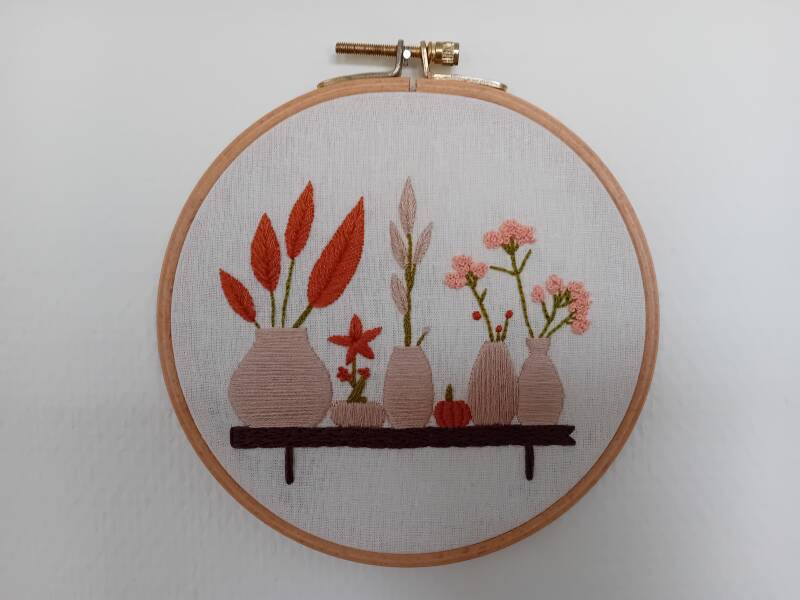
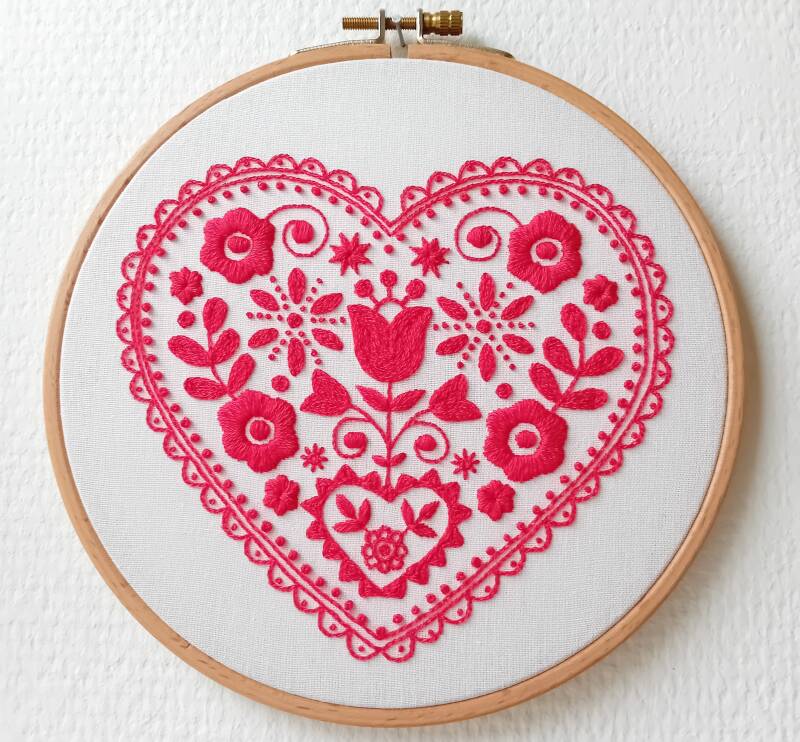
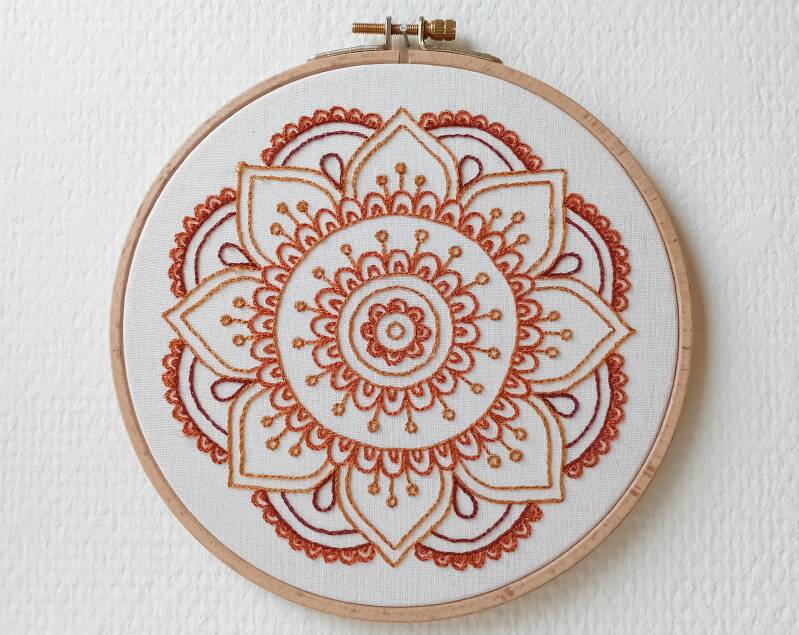

A few years ago, I called a friend and poured out my heart about how life was too hard for me and how I couldn't handle it anymore. He told me a story about a sparrow that tries its best to be like an eagle. It tries very hard to flap its wings to fly as high and elegantly as the eagle, and does its best to drink as quickly and as much as the eagle. But no matter how hard it tries, it will never be like the eagle, because it is a sparrow. And in doing so, it denies its own beauty and its own strength. Because a sparrow is unique just as it is and has its own unique talents. That touched me so deeply that I embroidered a sparrow afterwards. It has been hanging in my living room for several years now, reminding me that I can accept myself as I am, without forcing myself.
* For those who might be interested in Twelve Step programs, there is good news: they are available for anyone who feels stuck in themselves and think they need help. They are virtually free and can often be attended entirely online.
A small selection from the range:
- AA (Alcoholics Anonymous), OA (Overeaters Anonymous, food addiction), DA (Debtors Anonymous, compulsive spending/shopping), SA (Sexaholics Anonymous, sex and relationship addiction), RA (Rageaholics Anonymous, for those who struggle with rage), and every possible addict program you can imagine.
- CPA (Chronic Pain Anonymous), OCA (Obsessive Compulsive Anonymous, for those who suffer from obsessive-compulsive behavior), etc.
- and of course the Anon programs and related programs: Al-Anon (for those who suffer from the alcohol addiction of a loved one), S-Anon (the same for sex addiction),
ACA (Adult Children of Alcoholics and Dysfunctional Families, for those who grew up in a dysfunctional family), CoDA (Codependents Anonymous, for those who feel too merged with a partner/parent/child/... and want to break free from that)
- etc.