For weeks, I burned tea lights. And I looked at photos, over and over and over again. But mostly, I cried, deeply and raucously. At first, it was a primal scream that came from deep within. A broken heart, an emptiness that could never be filled. That's how it felt. Sometimes I cried for ten, twenty, thirty minutes straight. As if there were no stopping it."
This is what I said to a friend last night after she told me that she had recently experienced two very heavy losses. She told me about her pain, her grief, and she cried. I was so glad she cried. I let her cry. The more, the longer, the better. Tears need to find their way out. My friend said she doesn't really know how to grieve. That she doesn't know how to deal with it because she has no experience with it. Did I have any?
Well, it's the last thing you want to have experience with, but since suffering and death are an inherent part of life, everyone has to deal with it sooner or later. Me too. Last year, in the space of six months, I had to say goodbye to three loved ones. Three very different deaths, three very different kinds of relationships, and so the grieving process was different for all three.
The first death was that of my grandmother. My dearest bommieke, who died in October 2024. She had been in pain for a long time and she was tired, and even though she was able to give and receive a lot of love from her family until the very end, she had had enough. After a deathbed of five incredibly long days, she passed away peacefully. She was 88 years old and had her children around her when she left this life. My grief was immense. My grandmother was special to me, I really loved her. The question I was asked most often in the days that followed was: “How old was she?”, invariably followed by “Ah, but that's a good age, isn't it!”. And you know, that knowledge—that it was “a good age”—didn't help me one bit. Rationally, yes. But my heart ached. It was as if I had two different brains: one for reason and one for emotion, and I couldn't bridge the gap between them. I couldn't come to terms with the fact that she was gone, and I just had to grieve intensely. I just didn't know how. I had already lost three grandparents before, but this was the first one I had experienced so consciously, the first one where I was sufficiently connected to my inner self to feel the need to grieve. I had to feel and live through the pain in order to transform it and heal. Someone recommended a book to me that I found very helpful: On Grief and Grieving: Finding the Meaning of Grief Through the Five Stages of Loss, by Elisabeth Kübler-Ross. I also found the funeral, and even the preparations for it, to be healing. Together with my mum, I put dozens of photos in chronological order and we typed out what we would read at the funeral. This helped me. I wasn't alone; we went through this together. I found the funeral itself particularly beautiful. It did me good. Grandma had had a good life, and the whole family was able to say goodbye to her. It was good, and in my grieving process it turned out to be important to have done it this way.
Three days after the funeral, eight days after Grandma's death, I suddenly received a phone call late at night. A very good friend of mine had died: 56 years old, fallen with his bike, dead on impact.
That pain was completely different from that of my grandmother. Even though I found the often-heard comment ‘that Grandma had lived to a ripe old age’ completely misplaced, the difference in grief was clear. It is natural for people to die at 88. But 56-year-old men, who should still have decades ahead of them, are not supposed to die. As I wrote earlier, the pain was so great at the time that I walked around in a daze for a long time. Today, a year and a half later, things are much, much better. However difficult it was at times, and however often I postponed feeling my pain, in the end I had to acknowledge the grief and live through it. Not that it never flares up again, by the way. Sometimes I dream about him, and his birthday and death anniversary are also difficult moments. But most of the time, I'm okay. After all, life goes on. I've been able to come to terms with it reasonably well, even though I feel I'm not quite there yet. It will take time. Maybe those ‘flashes of grief’ will continue to surface for the rest of my life, I don't know. But that's okay. I'm safe. By God's grace, I can handle it.

Still, the death for which I had to use the most concrete tools was that of my cat. Yes, my cat. Just as I often heard the comment from my grandmother that “she had lived a good life,” I heard the same thing about my cat. He was 15.5 years old. The follow-up question that often followed was, “And when are you going to get a new one?” Well-intentioned, yes, but actually I just wanted to punch those people in the face. Sorry, not sorry. Milton and I had lived together for thirteen years. Thirteen years of coming home and being greeted with a head roll and a meow (in recent years he was so old and had arthritis, so it was a meow from the scratching post, but that was just as good!). Thirteen years of being woken up early in the morning because he insisted on eating (for which he didn't mind rolling out of his basket!). Thirteen years of companionship in the house. And in the last few months, he had so many ailments that he needed a lot of care, which we experienced as something that brought us closer together. He became much more cuddly, and we became much closer. When he suddenly started having unexplained seizures, we went to the emergency vet at 3 a.m., and two days later to a cardiologist-vet, where my Milton clung to me like a drowning man to a buoy. It was heartwarming and heartbreaking at the same time. The seizures—none of which the three veterinarians could explain—became more frequent, and I could see him suffering. He also said goodbye to me by sleeping on my belly for the last night, something he had never done in thirteen years. In the hours between waking up and being put to sleep at the vet's, he lay at the back of my wardrobe, which he had never done before either. Well, then you have to make the decision to release him from his suffering, even though it all happened very quickly and unexpectedly, in just three days.

The night before I had him put down, someone gave me a good tip. She told me that she herself had once written a letter to a deceased person and had gone to read it at the grave. In that letter, she thanked her deceased loved one for the life they had had together. Because my Milton was much more than a cat, but above all a roommate and even my fur baby (even though I'm not a cat person at all!), I didn't miss the opportunity to do the same, but now while he was still alive! I wrote a letter and read it to him—with lots and lots of tears. Milton responded to my love with head bumps, meows, and sleeping on my belly that night. We both said goodbye to each other, in our own way.
On the morning of the euthanasia itself, I hurriedly made some salt dough (there was no time to buy a paw casting kit online!) and made paw prints in it. I really wanted to have that, and it has made me happy for months!

Everyone is different, but for me, that empty scratching post really had to go. Really, really, really. I filled that empty space in my house with plants, which felt like a different kind of life, but definitely life. And I made a memorial box, which is by far the best tip for coping with grief that I have ever used. Apparently, this is often done for deceased children—God bless their souls. I put everything that belonged to Milton in that box: the letter I had read to him, a second paw print, Polaroids, the washcloth I used to wash the dirty gel off him after his heart echo, the ashes, etc. It also contains the watercolor painting my little niece made of him a week after his death, as well as the little Lego zebra my nephew wanted to give to Milton “so he can play with it in heaven” (I mean this. Too cute, isn't it?!).
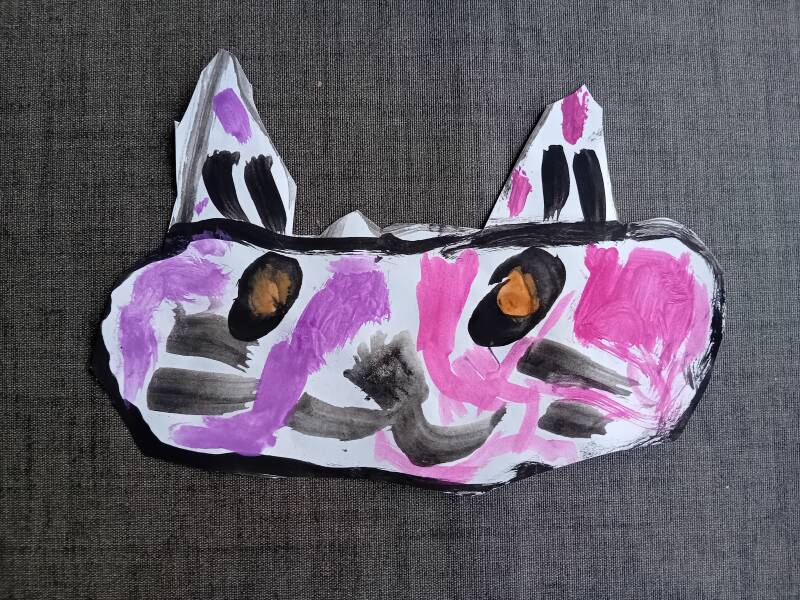
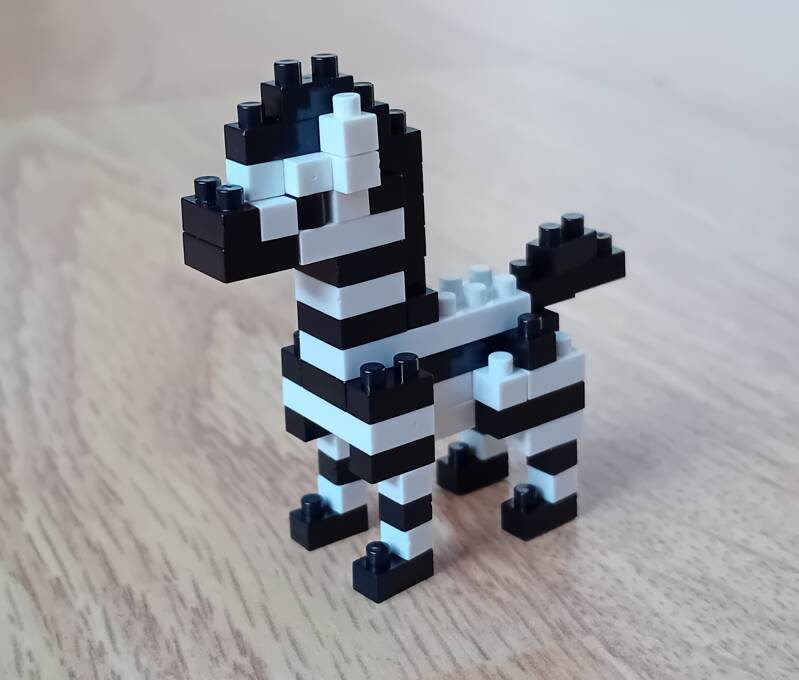
I placed Milton's box on the windowsill, right next to where the scratching post used to be, together with a tea light. I left that tea light burning for weeks. That way, something in the house was still moving, and he was still with me a little bit. Burning that light was very important to me at the time. But the beautiful thing was that after a few weeks, I sometimes forgot to light it. For me, that was a clear sign of grieving: I gradually came to terms with his absence, with his death. Eventually, after a few months, I felt that the box no longer needed to be on the windowsill, and it disappeared into the closet. And that was okay.
One feeling I couldn't let go of was that I wanted to carry him with me in some way. At first I thought about a tattoo, but that didn't feel right (despite the many tattoos I've had in the past). I ended up with a ring, one with his ashes in it. The ring is really beautiful, and I wear it day and night. My little Milton is with me, and it feels right. The grieving process is now complete, everything has found its rightful place. People were right: Milton had indeed reached a good age, and his life was over. Now his soul is in heaven, and I carry his remains with me every day.
All of this is what I told my friend yesterday. I processed all three deaths in very different ways. With my grandmother, it was very important to process it together with family; with my friend, strange but true, it was sometimes necessary to postpone the greatest pain but then feel it fully later; and with my cat, it was necessary to make it very tangible.
Today, I have a tangible reminder of all three in my living room: a small, beautiful urn with a tea light from my grandmother, my friend's sparrow, and Milton's urn and ring.
There is no right or wrong way to grieve. It is personal and unique, and everyone does it in their own way and at their own pace. If you are currently going through a loss, it is my prayer and hope that you may find inspiration here. May God be with you and give you courage and love to get through this, together with your loved ones.
And if you are reading this and believe in God yourself, would you also pray for my friend, so that she too may be comforted and strengthened during this difficult time?