Last week, during the extreme heatwave that was scorching our little country, among others, I ended up seeking shelter in a shopping center. There were a lot of cars inside that mall. Not just outside in the parking lot, but indoors as well. Those cars were there for sale, so as a strolling shopper, you could just pull the doors open, sit in them, and so on. I was struck by just how many people were doing that. What’s so appealing about a metal box with an engine inside? Personally, I don’t care one bit about cars, and they hold absolutely no appeal for me. They might not be a bad means of transportation, but other than that, they leave me cold. Except—and here it comes!—when it comes to car metaphors. Because yes, because aside from slogans and acronyms, Twelve-Steppers are usually also crazy about metaphors. I’m certainly no exception to that. Even car metaphors—hola pola!
There are at least two that I hear regularly and often use in my recovery. Here they are...
"A car has two pedals: the gas and the brake. There is a reason for that, because you need both."
A first side note, of course, is that it’s mostly Americans who use this expression, because they drive automatic cars. Those indeed only have two pedals, whereas most cars over here naturally have three, because of the clutch. But anyway, the point is: every car has a gas pedal and a brake pedal, and both are super, super, super important.
Before recovery, I also had two pedals, but I only used one: the gas. I was constantly racing around, running from pillar to post, always thinking things would be better somewhere else. The mindset of: I might be a little (or very) unhappy right now, but I’ll be happier if I go to that café, join that party, meet up with that one friend... Restlessness ruled my life, and I thought I could quiet it by adding even more chaos to my days. That doesn’t work, does it? My gas pedal was permanently floored, and eventually, my car crashed spectacularly! My body gave out, and my soul was completely drained and exhausted. In the end, I was just lying on my bed crying, hoping I would die right then and there. Tears streamed down my cheeks onto my pillow, and I had no strength left in me to stand up and face the day. Simply getting dressed and brushing my teeth felt like an impossible task, so I just lay there in that dark room, waiting for a death that wouldn't come. Or rather, it did: my soul was far gone, already stone dead, but my body refused to follow. Thank God, as I see it now. Thank God. Life still had so much more to offer, but I just didn't know it back then.
After years of flooring the gas and being completely totaled, I was admitted to the psychiatric ward. And then again. And after that, I spent a year in outpatient treatment at a psychiatric hospital. Then I tried to go back to work, only to crash again. And that is when I was declared unfit for work. That last part happened about four years ago, and since then, I have started living much more in alignment with my inner self. Stepping on the gas and braking whenever God asks me to, whenever my body and soul tell me to. They don't have to scream anymore, like they used to. Today, a whisper is enough, and I listen. I hit the gas when it feels right, and I brake again when the situation calls for it. Balance between the two turns out to be crucial. Only accelerating and then completely crashing isn’t right. Because crashing—which is a forced way of braking—can be incredibly disruptive emotionally, spiritually, and mentally. When that happens, the ordinary, daily, constructive things can't take place: taking care of myself, cooking healthy meals, cleaning my apartment, feeling happy and peaceful, and feeling connected to God and others. So, only braking isn’t good, but only accelerating isn’t either. Balance, it is. A car indeed has two (or three) pedals for a reason.
"There is a reason the rearview mirror of a car is so small and the windshield is so big. Focus on what lies ahead, what is to come, and not on what lies behind you."
I think this is a great metaphor, and one that I could personally pay more attention to in my life. In the silence, during those empty moments when my mind just wanders, I still dive into the pain of the past all too often. I focus on things that happened to me, things that hurt me and disrupted my life. I then try to analyze why it happened and what its effect is on my life today. Whenever I dive into that, I feel darkness, pain, suffering, and grief inside. It never does me any good. It’s true what they say: a car's windshield is much bigger than the rearview mirror, so we are better off focusing on what lies ahead than on what is behind us. Still, I don't think we should completely ignore the past. Have you ever tried driving a car without a rearview mirror and/or side mirrors (which, after all, serve to show you what is happening to your left or right rear)? That is life-threatening! You would just end up barreling forward without being mindful of your entire surroundings. I believe it’s the same with recovery: sweeping things under the rug and closing your eyes simply doesn’t work. It’s like pushing a balloon underwater. Eventually, that balloon will pop right back up, and you’re right back where you started. Pain and wounds need to be healed, and to make that possible, they need light and space. But: in moderation. Not 24/7. Looking forward, through that big windshield, works better. Glimmers are, of course, a great tool for that!
Yesterday, I was asked to be a speaker at an American meeting that I'd never attended before. I was asked to share according to the well-known twelve-step format: What it was like (before recovery), what happened (what brought us into recovery), and what it is like now. Well, I don't like doing that, because it forces you to share about the pain of addiction and relive those traumatic memories all over again. I much prefer sharing about a recovery topic, like on this blog: what are the tools that help me today, that make me stronger in recovery right now? That way, I can stay away from the pain. Yet, it was good that I got to tell it one more time. It brought up pain and sadness, and I could show where God has led me out of, and how incredibly rewarding working hard on our recovery can be.
At one point I said that if I were to write down everything that happened to me between the ages of 25 and 30 (that is, between 2015 and 2020) in a book, it would be a bestseller. Probably a sensationalized, tabloid bestseller, but a bestseller nonetheless. I said I don't want to write that down, but I would love to write a book about recovery, just like I do with this blog. I received so much support for this: "Write that book! Do it!!" This isn't the first time; people have said that before—sometimes very enthusiastically. And that, that is my windshield. I have something to look forward to, something to live for, something to hope for. I want to write a book. I’ve wanted that for years, and I’ve been praying for it for years too. And all this time, I hear God saying: "That will come. Just trust Me. But everything in its own time, not just yet." And while a year ago I often prayed for writing opportunities and they didn't really come (occasionally for a few spiritual and religious magazines, but that was it), He gave me this blog at the end of December. That wasn't my idea, nor was it something I had thought about beforehand, but suddenly it was there. And it was right. At every moment, in every phase of the blog so far, it just clicked.
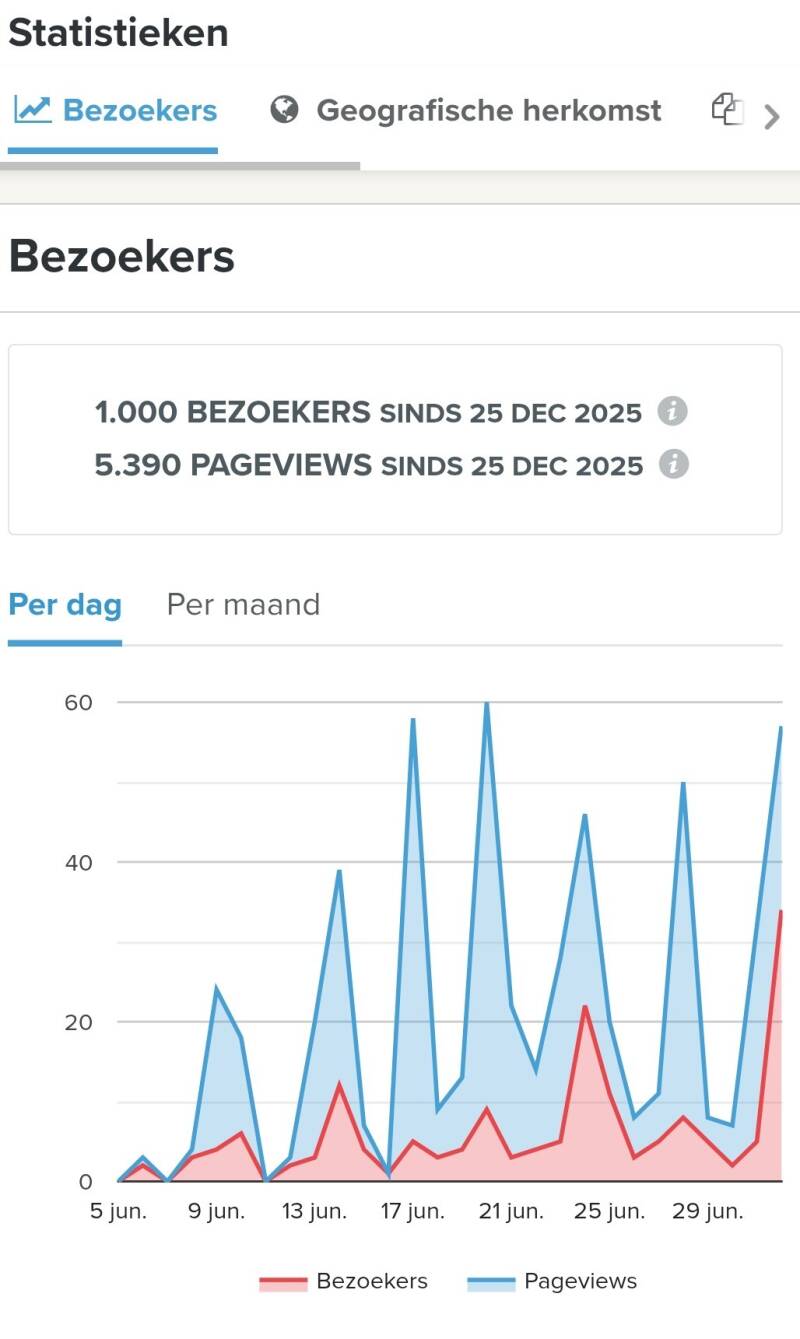
Yesterday I got an email saying that Making Lemonade had welcomed its 1,000th visitor. A thousand! I think that’s absolutely crazy (thank you, everyone!). I know this is God’s work. And that book—it’s still too early for that. But it will happen someday; I know that for sure. When, where, and how—only He knows. But it will happen. And in the meantime, I’m waiting for Him, continuing to write here and working on my own recovery. By looking through the windshield, and every now and then—especially in therapy, and not too often during my own quiet time—taking a look in the rearview mirror as well.