Eating healthy and balanced is one of the nine lifestyle habits of healthy centenarians in the Blue Zones, right alongside belonging to a social circle or community. But the question is: what does healthy eating actually look like? How do people in the Blue Zones do it?
According to the official Blue Zones website:
Wine @ 5
People in all blue zones (except Adventists) drink alcohol moderately and regularly. Moderate drinkers outlive non-drinkers. The trick is to drink 1-2 glasses per day (preferably Sardinian Cannonau wine), with friends and/or with food. And no, you can’t save up all week and have 14 drinks on Saturday.
80% Rule
“Hara hachi bu” – the Okinawan, 2500-year old Confucian mantra said before meals reminds them to stop eating when their stomachs are 80 percent full. The 20% gap between not being hungry and feeling full could be the difference between losing weight or gaining it. People in the blue zones eat their smallest meal in the late afternoon or early evening and then they don’t eat any more the rest of the day.
Plant Slant
Beans, including fava, black, soy and lentils, are the cornerstone of most centenarian diets. Meat—mostly pork—is eaten on average only five times per month. Serving sizes are 3-4 oz., about the size of a deck of cards.
Just like in my last blog post, I’m not going to give a lecture or write a theoretical paper on the scientific effects and benefits of this lifestyle (God, the absolute thought of it!). Instead, I want to share my own experience, strength, and hope. Because food and I haven't always been on the best of terms. On the contrary, we’ve always had a love-hate relationship! Fortunately, things are completely different today, and that’s the hope I really want to share with others.
Wine @ 5
I can truly see how this advice works for many people, but it’s just not for me. As a recovering addict, I stay far away from mind-altering substances—and alcohol, of course, is one of them. The past has proven time and again that I have no off-switch once I start drinking; I end up doing and saying things I would never do or say when sober. Plus, emotions get magnified a hundred times over when we’re drunk. Since I already feel everything pretty deeply anyway, I have absolutely no need for that.Still, I love the idea of having a ritual to wind down at the end of the day, which is exactly why people in the Blue Zones have a glass every evening. For me, though, that ritual doesn't involve a glass of wine. Instead, it’s a delicious cup of fresh green tea, a small bowl of dried edamame with a large glass of lemon water, or even just taking a relaxing shower at the end of the day! Stepping away from the day and looking forward to the peace of the evening and night strikes me as a very healthy habit.Recently, I’ve started a new ritual of my own: decaf coffee with sugar-free soy milk! I know, it sounds unappealing, but it really is delicious. The idea came to me last week when I smelled amazing coffee at someone's house and realized I hadn't had a decaf in weeks. I went looking for good coffee and found the perfect one. Now, during the day, I actually look forward to curling up on the couch after dinner with my decaf latte, and I enjoy every single sip.So, wine @ 5? No thanks! But healthier indulgences are always welcome here.
The 80% Rule
Until I watched the Blue Zones documentary a few years ago, I had never heard of the 80% rule, but it resonated with me instantly! At the time, I was still in a recovery program for food addicts where all meals are weighed and measured. This means you eat exactly what’s been determined beforehand, rather than how much or how little you actually want to eat at that meal. The meals themselves were always incredibly hearty—literally a plate piled high with vegetables and meat or other proteins—so you’d always end up completely stuffed by the end of it. That always rubbed me the wrong way, the feeling that I had to overeat. Because I didn’t have the emotional or spiritual space yet to truly listen to my body and intuition, it felt safer to stick to those pre-measured portions.When I decided about six months ago that I was ready, I put the scale away. I kept following the same food plan, but adjusted it based on what I needed in that exact moment. The 80% rule was the very first thing that popped into my head, and that’s how I started eating. It really works. I feel satisfied without feeling like I've overeaten. I’ve been doing it this way for six months now, and I don't think I’ve gained or lost a single ounce, so it definitely works!
Plant Slant
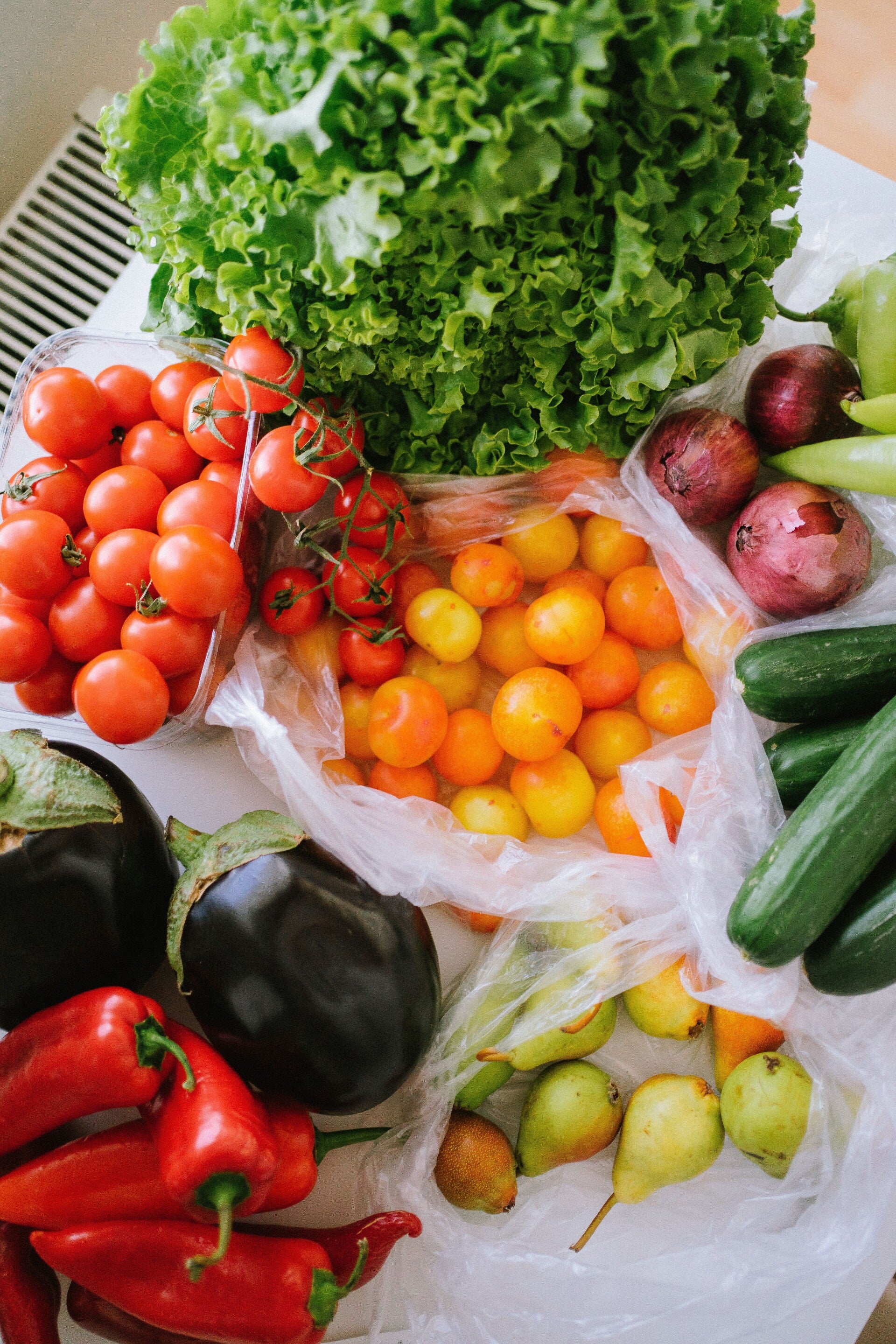
It’s hard to believe it’s already been four years since October 2022, when I decided to join a twelve-step program for food addicts. That decision wasn't because I thought of myself as addicted to food or sugar (which I am, by the way), but rather because my body was having a really hard time digesting carbohydrates. Just about everything made me sick: fruit, bread, potatoes... basically anything high in carbs. I’ve actually written about that before. The meal plan provided was exactly what I needed because it’s low-carb, which keeps blood glucose levels from spiking. I started eating exactly what was prescribed. That meant no potatoes, pasta, bread, rice, cookies, etc., but instead plenty of vegetables, proteins, and fats. In practice, at least three-quarters of my plate consists of vegetables—partly raw and partly cooked. To this day, I still love seeing so many colors and textures on my plate! Grilled eggplant, steamed pumpkin, roasted cherry tomatoes with balsamic vinegar... I absolutely love it! Along with that comes a portion of protein—like cheese, eggs, fish, meat, tofu... or whatever you like. Finally, there’s the healthy fat: one to three tablespoons of olive oil, mayonnaise, or salad oil per lunch or dinner. The plates are literally overflowing, colorful, and something I enjoy every single time. Almost every time I eat with others (and bring my own food) or have people over, someone comments on how delicious my food looks. And I can’t blame them, because it really is!
The major benefit of this way of eating is that my cravings are completely gone. I no longer have that uncontrollable urge—that compulsion—to eat, as if I’d commit a crime if I couldn't have it. That’s how it used to be constantly, so I just kept eating. I thought it was hunger, but it was pure craving, driven entirely by the sugars in my diet. We’re talking white bread with chocolate spread right before bed (for which I’d literally bike to the 24-hour bread vending machine at 11 p.m.—true story!), granola bars permanently stashed in my purse, and freshly baked cupcakes always in the freezer 'just in case.' It controlled my life, and I didn't even realize it.
Today, I eat plates full of vegetables (with fruit only in the morning), supplemented with meat, eggs, or tofu, and I don't snack at all. Because there are no cravings, I don't feel the need to eat between meals anymore. About half an hour before each meal (I leave at least four hours between them), I start to get a little hungry, but that pales in comparison to the intense compulsion I felt when I was still eating high-carb. It’s a true liberation, and my body is healthier than it has ever been. Every year I go to the doctor for blood work, and every single time my levels are absolutely perfect. My doctor agrees that my BMI is ideal too—not too high, not too low. My body is healthy, and I notice the effect on my mind as well. I used to eat a lot of chips, pizza, and cookies, and even though it felt amazing for a brief moment, I always felt down, depressed, and empty afterward. So I’d eat something else to feel happy again, which becomes a never-ending cycle. Back then, I had a BMI of 32.6, which meant I was severely overweight. Since switching to this lifestyle, I lost 77 pounds (35 kg) in nine months, and I’ve maintained the exact same weight since June 2023, now with a healthy BMI of 22.2. It’s a world of difference! I feel so much freer to choose what I do or don't want to eat (no more compulsion!), and I feel healthier and more balanced in both mind and body.
Seeing that people in the Blue Zones eat in a similar way (even though most of them do eat pasta and bread) doesn't surprise me at all. Eating healthy, straight-from-nature food simply cannot be bad for a body that is pure nature itself (since it wasn't made in a factory!). If I can keep going like this and continue to take good care of my body, I hope to add many healthy, vibrant years to my life as well!
What are your thoughts after reading this? Is this something that interests you and feels achievable, or does it not appeal to you at all? Or maybe you're already doing something similar? If you have other healthy eating habits of your own (like eating organic or avoiding artificial additives) that could inspire me and others, then feel free to share them in the comments below!

Reacties
Reactie plaatsen